Put a Pattern on That Deer: The Case for a Hunting Orchard
Most hunters think in seasons. A good food plot manager thinks in weeks. But the most effective land stewards think in years - and that's exactly where fruit and nut trees enter the picture.
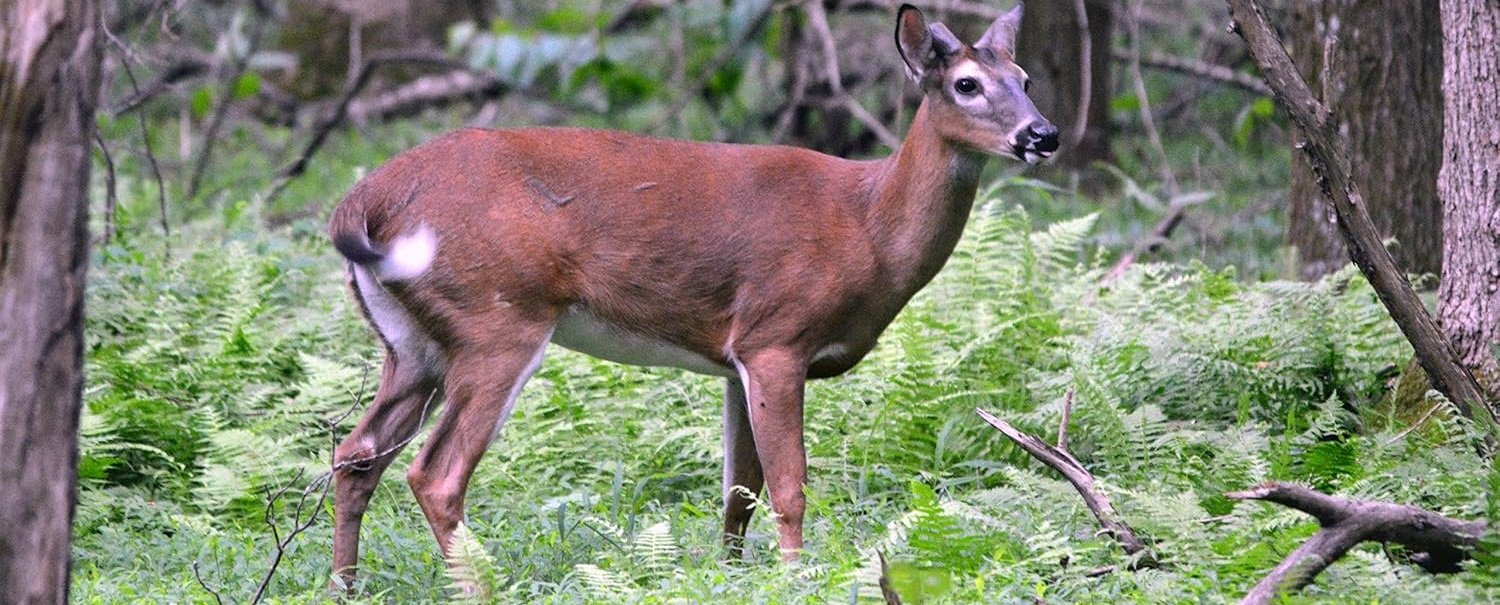
There's a phrase you'll hear constantly in hunting circles: "patterning your whitetail." The idea is simple - understand what deer want, when they want it, and where they'll go to get it. Then design your land so that the answer to all three of those questions is your property. Not your neighbor's.
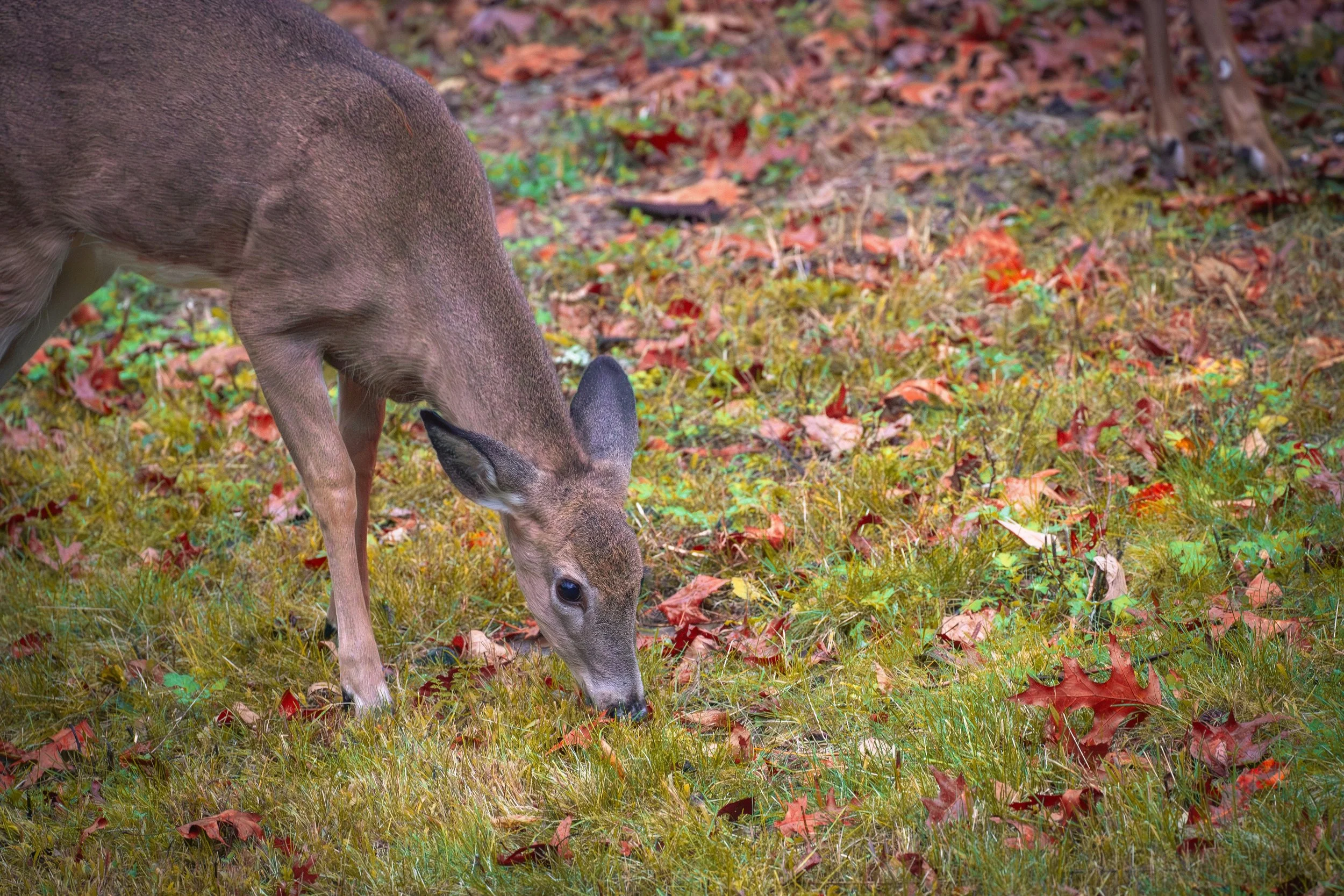
Traditional food plots do this with clover, corn, brassicas, and oats. And they work. Deer behavior shifts week to week as temperatures drop - clovers when it's warm, brassicas and corn when cold fronts move through, oats carrying through the rut itself. But the weakness of an annual food plot is the same as its strength: it's seasonal. You're in control while it's growing, and then it's gone.
Fruit and nut trees flip that equation. With the right mix of species, you can extend the productive season from early spring all the way to Christmas - giving deer a reason to stay on your property year-round rather than ranging out when the plot goes bare. That's not just a nutrition strategy. That's pattern management.
The Candy Bar in the Cornfield
Grant Woods of GrowingDeerTV calls it the Candy Bar approach: plant trees that offer something deer can't easily find anywhere else in your area. Where acorns are abundant, apples draw deer. Where chestnuts don't exist, they become irresistible.
The key is thinking about what's already in your landscape - and then planting what's missing. A diverse hunting orchard doesn't just add food. It adds food at times and in forms that shift deer patterns in your favor across the entire season.
The Full Season, Tree by Tree
Here's how the calendar plays out with the trees Deer Orchard carries, mapped against deer behavior and hunting windows in Ohio and the Midwest:
Tree Drop Window Deer Interest Notes
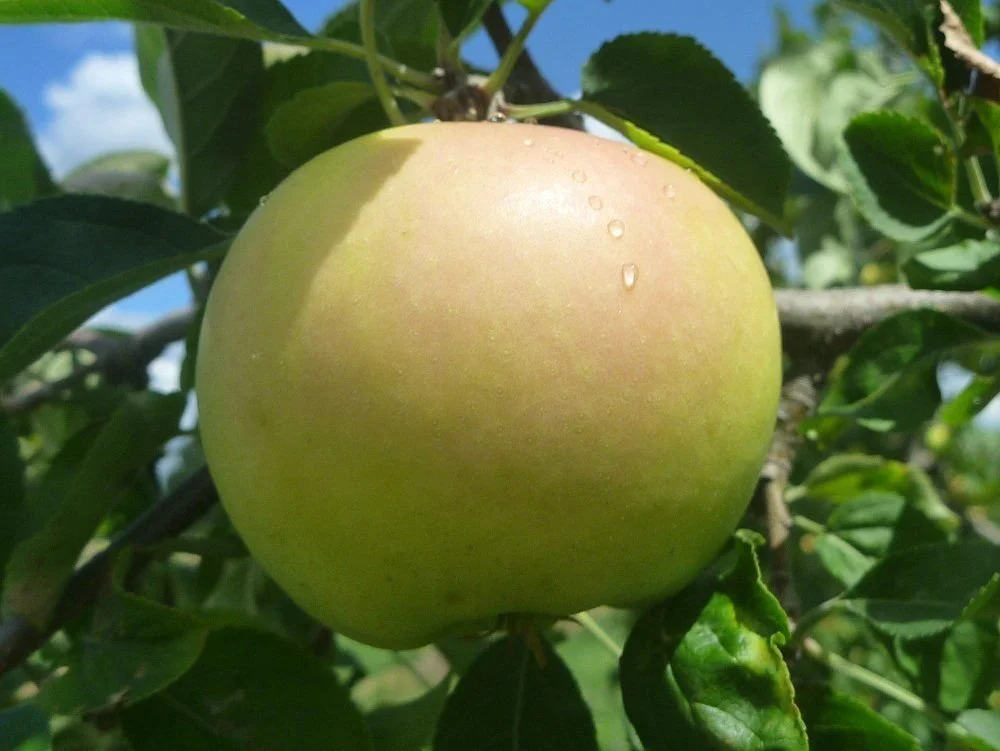
Apple Aug - Nov High Early varieties pull deer before hard mast drops; late varieties hold fruit into
November. Mix early and late for the widest window
Pear Aug - Oct Very High Underrated. Deer will walk past dropping apples to hit a pear tree. High
carbohydrate, very palatable
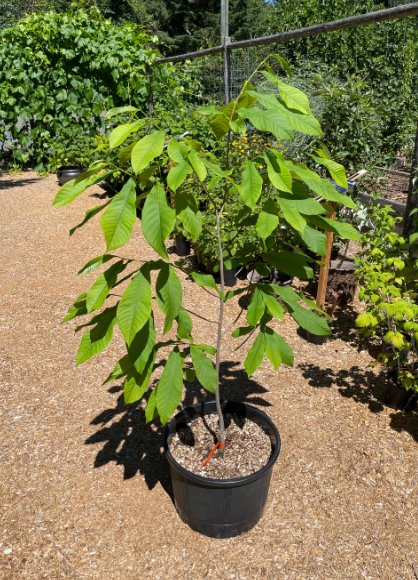
Pawpaw Sept - Oct Moderate Deer generally avoid pawpaw foliage and bark due to natural compounds in the
plant - which makes them easy to establish without heavy protection. Ripe
fallen fruit gets eaten opportunistically. Structural and ecological value is the
main argument here
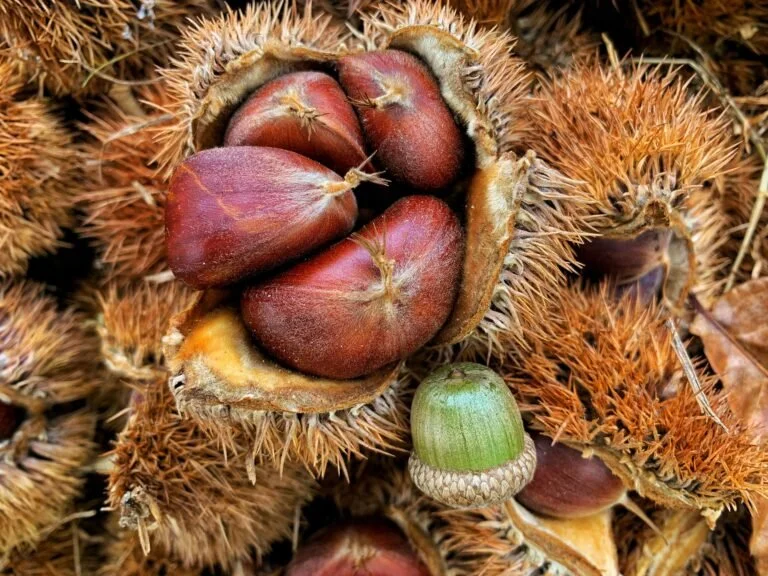
Chestnut Sept - Oct Exceptional Hard mast drops mid-September to late October - right as bowhunting season
opens. Twice the protein and up to four times the carbohydrates of acorns, with
none of the bitter tannins. The anchor tree for this whole system
Persimmon Oct - Dec Exceptional Drops from October through December depending on your zone, ripening after
the first frost - squarely in the heart of rut and late season when deer are most
carbohydrate-hungry. Reliably the last food source standing
Oak Oct - Dec High Deep into deer season and winter. White oak preferred, but production varies
year to year - which is exactly why chestnuts are the more reliable complement
Pecan Oct - Nov High High fat and energy, used by deer like acorns for building winter fat reserves. An
underutilized option in Ohio and the mid-south.
The season-long arc runs something like this: apples and pears bridging into early fall, then chestnuts and pawpaws as bowhunting opens, persimmons carrying through the rut, and oaks and pecans extending into late season and winter. If you plan for it, something is always hitting - and deer learn that your property is the place that reliably delivers.
The Problem With Monoculture Plots
Experienced hunters know that deer pattern your food plot just as much as you're trying to pattern them. Deer are creatures of habit - they revisit reliable food sources and build routines around them. The goal of a well-designed property is to be that reliable source across as many weeks of the year as possible.
The risk of a single-species annual plot is dependence on one window. A monoculture also teaches deer a predictable rhythm that doesn't serve you once the crop turns. A diverse perennial orchard solves this - it's not just more food, it's food that deer can't find on the forty acres next door, arriving in a sequence that keeps them anchored to your land from August through December.
How to Think About Planting Layout
The best food plot thinkers distinguish between destination plots - larger areas where deer go to feed - and kill plots, an acre or less, designed to control exactly where a deer stands when you're in the tree. The same logic applies to a hunting orchard. A dense cluster of chestnuts or pawpaws functions as a destination. A few persimmon trees on the edge of a travel corridor, upwind of your stand? That's your kill plot.
At our Southern Ohio Chestnut Company (SOCC) site in Athens County, we plant chestnuts at 40-foot between-row spacing and 20-foot within-row spacing, with a pawpaw inserted between each chestnut in the row - which creates an effective 40x10 grid. That interplanting gives you two complementary trees in the same footprint: the chestnut as the primary mast producer, and the pawpaw filling the gap with early soft mast and canopy diversity. If you're planting pure chestnuts for a hunting property and want to skip the management complexity, a simple 40x40 grid works well - chestnuts can grow 40-60 feet tall with a 30-40 foot canopy spread at maturity, so 40-foot spacing gives each tree room to produce at full potential without crowding.
We'll go deep on specific planting plans - a 10-tree starter layout, a 1-acre model, and a 5-acre design - in a follow-up post. The short version here: start by identifying where deer are already moving, then place your trees to intercept that movement and deepen it.
Don't Give Them a Reason to Leave
The best argument for a hunting orchard isn't the hunt itself - it's the math of deer behavior. Trees are a crucial part of the natural ecosystem, and deer have evolved to seek them out and teach their offspring to do the same. A consistent mast-producing tree on your property is one that deer return to year after year - and bring next year's deer with them.
That's the long game. You're not just planting for this fall's hunt. You're shaping where deer want to be for the next decade. A few well-placed chestnut or persimmon trees become anchors - fixed points in the pattern you're building. Everything else on your property: your plots, your stands, your access routes, can orient around them.
Plant the trees. Work the pattern. Give your deer every reason to stay, and no reason to go anywhere else.