FREE SHIPPING ON ORDERS $250+
FREE SHIPPING ON ORDERS $250+

GROW DEER
From real orchardists, for hunters and landowners

Why Choose Us?
Production Expertise
As commercial orchardists, we focus on maximum production per acre—and transfer that knowledge directly to you

Trees for Wildlife
Varieties chosen specifically for their appeal to deer and wildlife, not just humans.

The only difference between an orchard and a deer orchard is a fence. Our trees produce for both.
The Only Difference
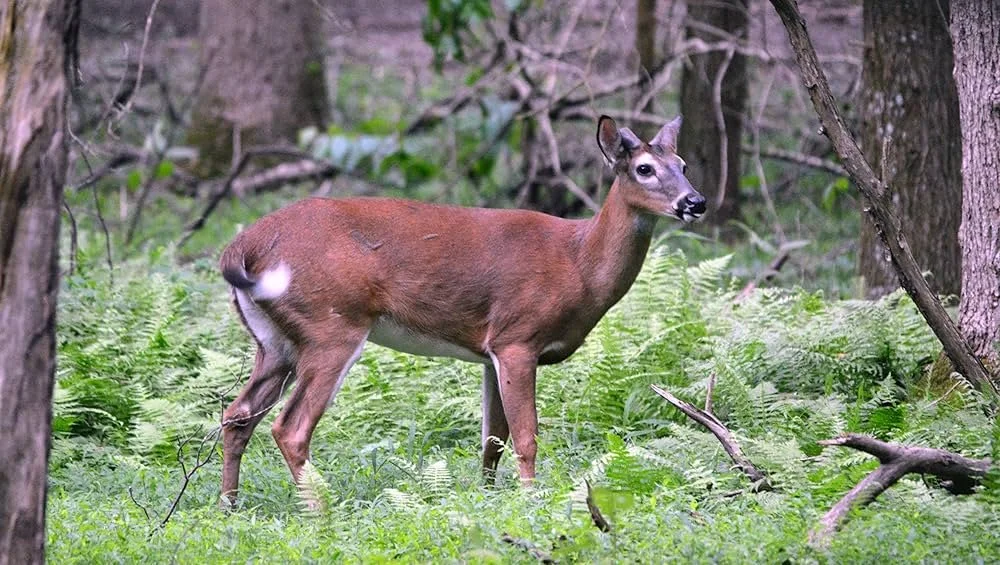
Chris Smyth & Badger Baldwin Johnson’s combined years of hands-on orchard work and forest management to help landowners get real results.
From propagating and selecting production-ready trees to designing wildlife-focused planting plans, their experience ensures every tree is chosen to perform and placed with purpose.
At Deer Orchard, the focus is on long-term value for wildlife and the land.
Learn more about us here.
Deer Orchard started in our own orchards, where we grow fruit and nut trees for human consumption. As orchardists, our entire focus is on one thing: production. How many pounds per tree? How quickly can we get to harvest? How do we maximize yield per acre?
After years of planting chestnuts, persimmons, and other productive trees on our own orchard properties, we had a realization: the skills that make a successful commercial orchard are exactly the skills that create the best wildlife habitat.
The only difference between an orchard and a deer orchard is a fence.
We noticed that many nurseries selling "wildlife trees" focused on ornamental qualities or easy propagation rather than actual production. Hunters were buying trees that looked good but produced minimal food for wildlife. We knew we could do better.
That's why we created Deer Orchard—to bring commercial orchard expertise to hunters and land managers who want trees that actually produce.

SHOP BY CATEGORY
FEATURED PRODUCTS
Size/Age: 1-2-year seedling, 15-24 inches tall
USDA Growing Zones: Zones 5-9
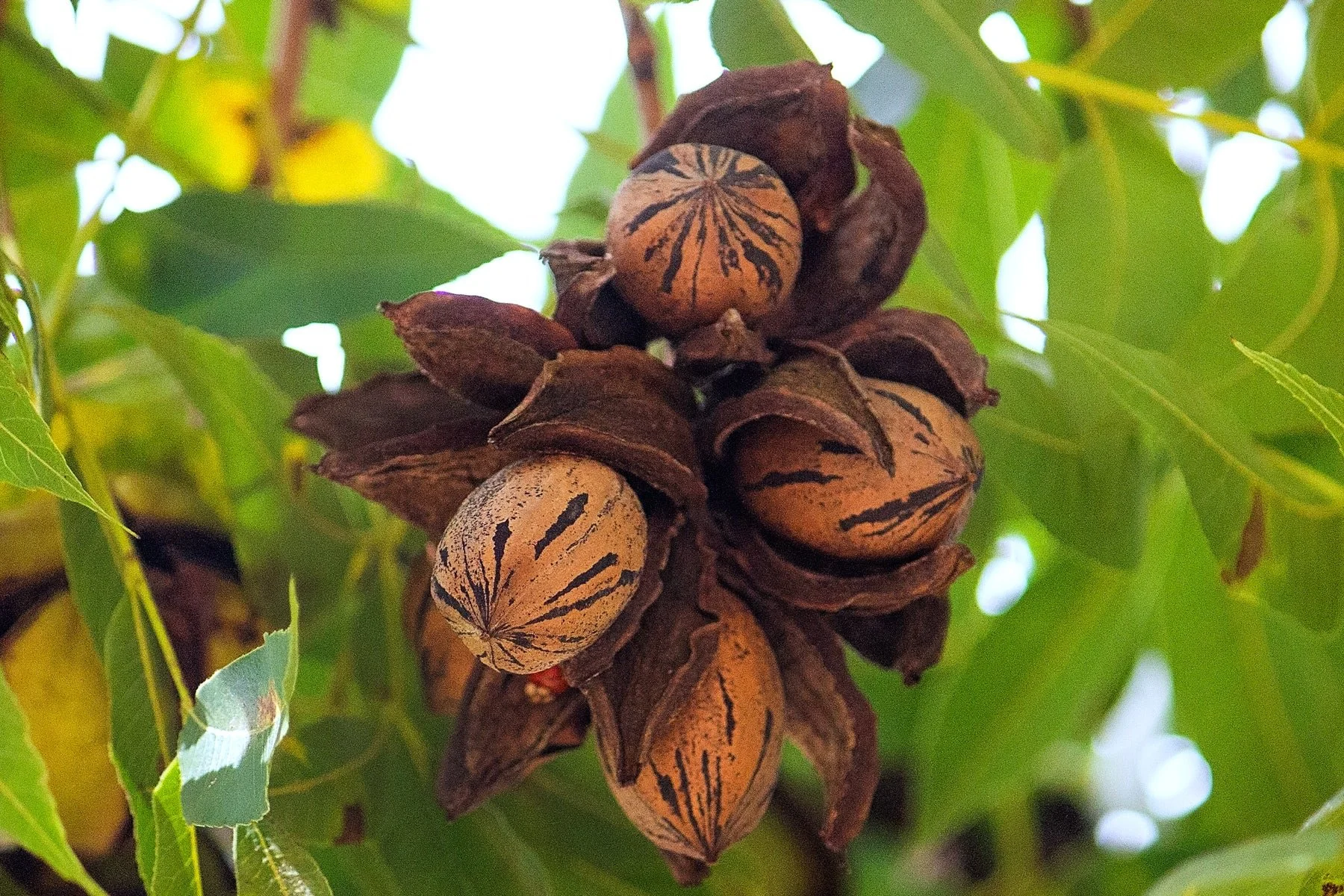
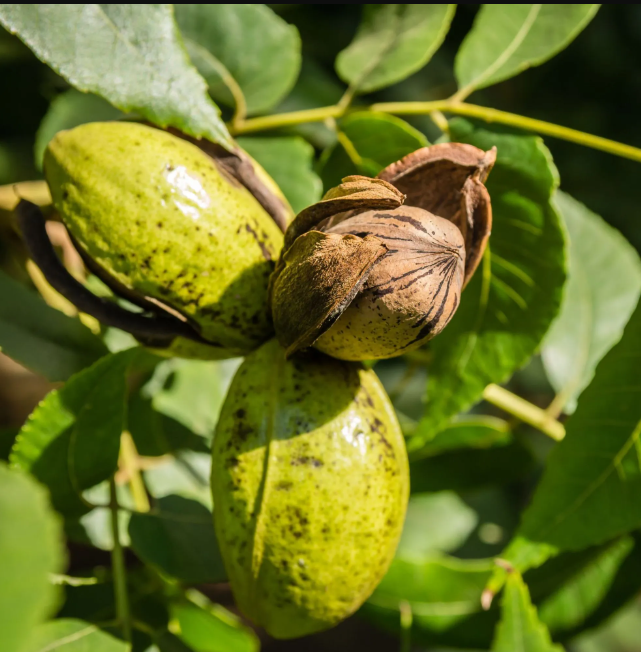
These Northern Pecan seedlings (Carya illinoinensis) are grown from nuts selected from wild trees that have adapted to colder northern climates. As members of the hickory family, pecans produce extremely nutritious nuts with high fat content that are eagerly sought by deer and other wildlife.
Our pecan seedlings are developed with strong root systems to ensure successful transplanting and establishment. While standard southern pecans may struggle in colder regions, these northern-adapted selections show excellent cold hardiness and reliable nut production in zones 5-9.
Pecans typically begin bearing nuts in 10-15 years and continue producing for generations, making them an excellent long-term investment in your property's wildlife value. Mature trees can produce 50+ pounds of nuts in good years, creating significant wildlife feeding opportunities.
Benefits for Wildlife/Hunters:
High-fat nuts provide critical energy for deer during pre-winter periods
Nuts typically fall later than acorns, extending the natural feeding season
Complementary to oak plantings for more diverse wildlife nutrition
Creates multigenerational wildlife habitat improvement
Planting Instructions: Plant in full sun with deep, well-drained soil. Pecans develop extensive root systems, so avoid planting near septic systems or foundations. Space trees 40-60 feet apart for optimal growth and nut production.
Care Requirements: Water deeply and regularly during the first two growing seasons. Mulch around the base to retain moisture and suppress competing vegetation. Once established, pecans are relatively drought-tolerant.
Shipping Notes:
Potted trees are currently available for local pickup only.
Looking for bare-root trees? These are available during the dormant season. Shop here.
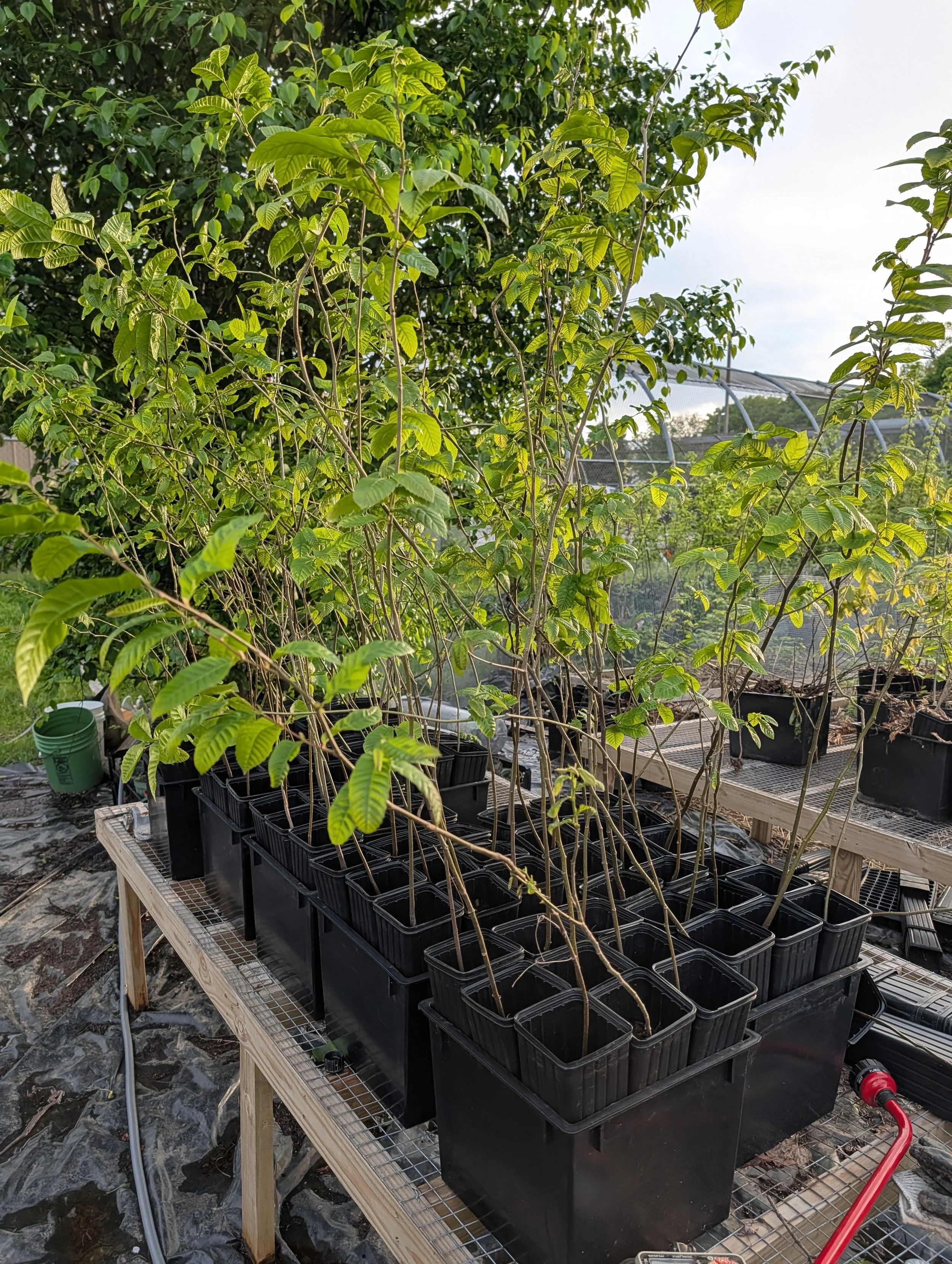
Size/Age: 2-3 year seedling, 30+ inches tall
USDA Growing Zones: Zones 5-9
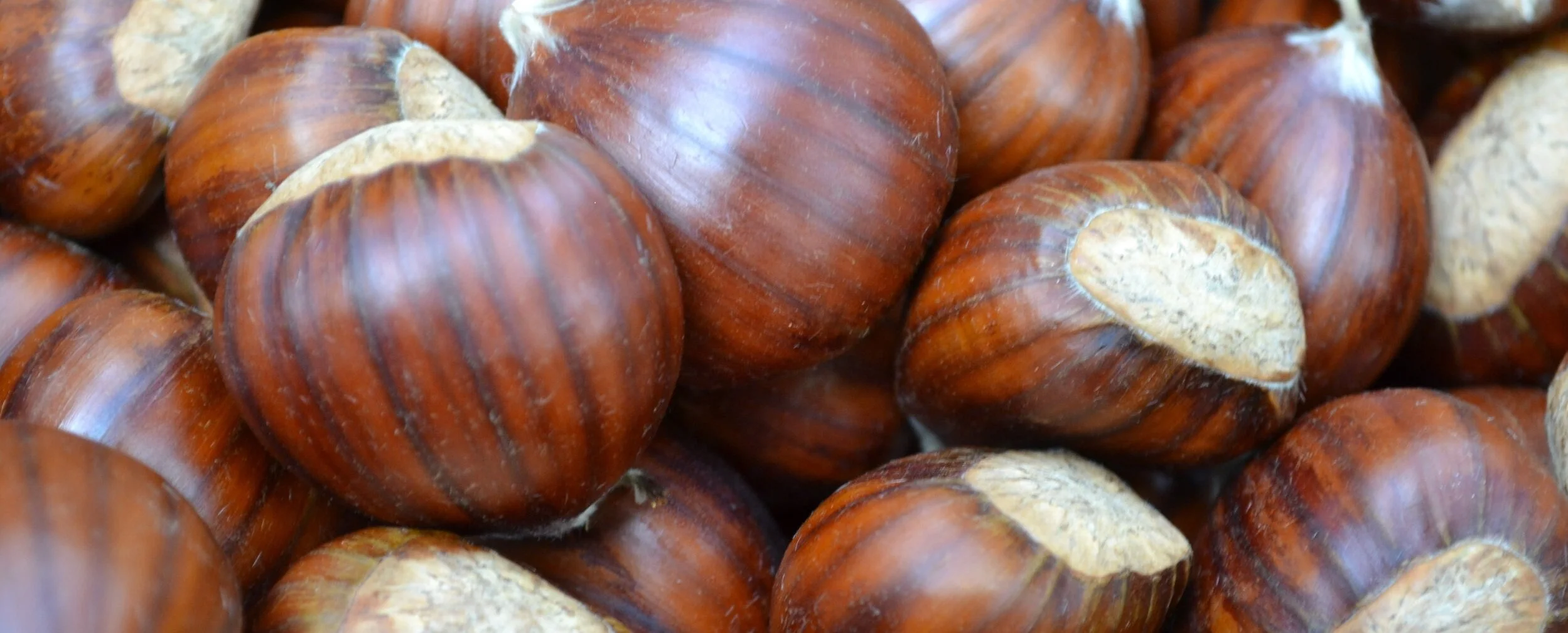
These vigorous Chinese Chestnut seedlings (Castanea mollissima) are an excellent addition to any property looking to attract deer and other wildlife. Chestnuts produce highly nutritious nuts that are eagerly sought by deer, making them an excellent long-term food source for your hunting property.
Chinese Chestnuts are blight-resistant and much hardier than their American counterparts. These 1-year seedlings are grown in air pruning beds for healthy laterally branching roots to ensure successful transplanting, then potted up on the second year. Each seedling is at least 30+ inches tall, but most are 30-36 inches.
Trees typically begin producing nuts within 5 years of planting and mature (25+) trees can produce more than 100 lbs per year.
Benefits for Wildlife/Hunters:
Tender shelled nuts are highly attractive to deer
Creates a reliable fall food source for wildlife, with a yearly nut crop.
Establishes a permanent deer attractant on your property to blend with your traditional food plots.
Planting Instructions: Plant in well-drained soil in full sun. Space trees 40-50 feet apart for final spacing, or 20 ft apart when intending the thin every other tree. Best planted in spring or fall.
Potted trees can be planted at any time through the year provided you can water and care for the trees.
Care Requirements: Requires minimal care once established. Water regularly during drought in first growing season. Ideally planting in soil with a pH of 6.5 or less.
Shipping Notes:
Potted trees are currently available for local pickup only.
Looking for bare-root trees? These are available during the dormant season. Shop here.
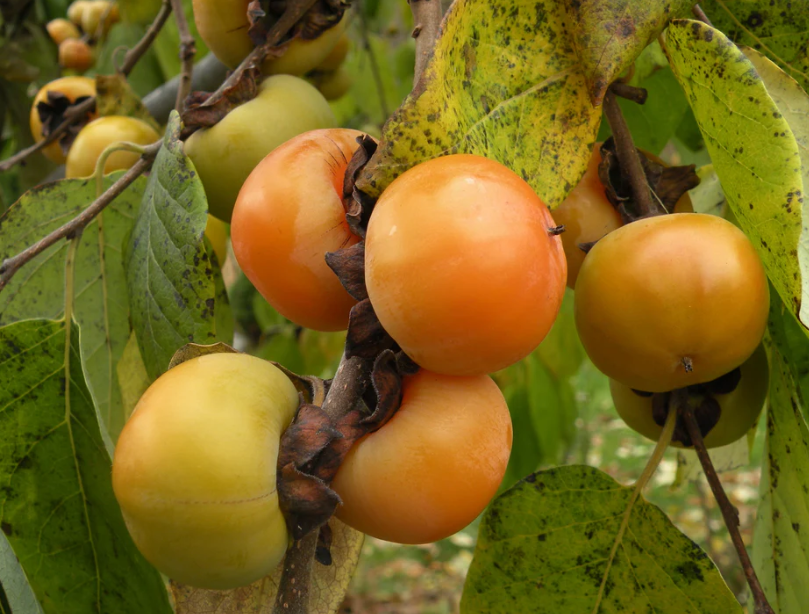
Size/Age: 1-year seedling, 12-18 inches tall
USDA Growing Zones: Zones 4-9
The American Persimmon (Diospyros virginiana) is a native tree that produces one of the most attractive deer foods available. These potted trees will grow into medium-sized trees that produce small, orange fruits that become exceptionally sweet after frost, typically in October and November—coinciding perfectly with deer hunting season.
Our persimmons are grown from seed collected from wild trees with superior fruit production. Each tree may grow into either a male (non-fruiting) or female (fruiting) tree, so we recommend planting several to ensure fruit production. Trees typically begin bearing fruit in 5–7 years.
Unlike their Asian cousins, American Persimmons are extremely hardy and require no spraying or special care once established. They're a true "plant and forget" wildlife attractant that will continue working for you for decades.
Benefits for Wildlife/Hunters:
Fruits ripen during peak hunting season after frost
Extremely high sugar content creates a powerful deer attractant
Fruits persist on the tree and drop gradually through late fall
One of the last natural food sources available before winter
Planting Instructions: Plant in full to partial sun. American Persimmons adapt well to various soil types, including poor or rocky soil. Space 20–30 feet apart.
Care Requirements: Water regularly during the first growing season. Once established, persimmons are drought-tolerant and require minimal care. They have deep taproots making them very resilient.
Shipping Notes: Ships in pots during the growing season. Persimmons may be slow to leaf out in spring—be patient after planting.
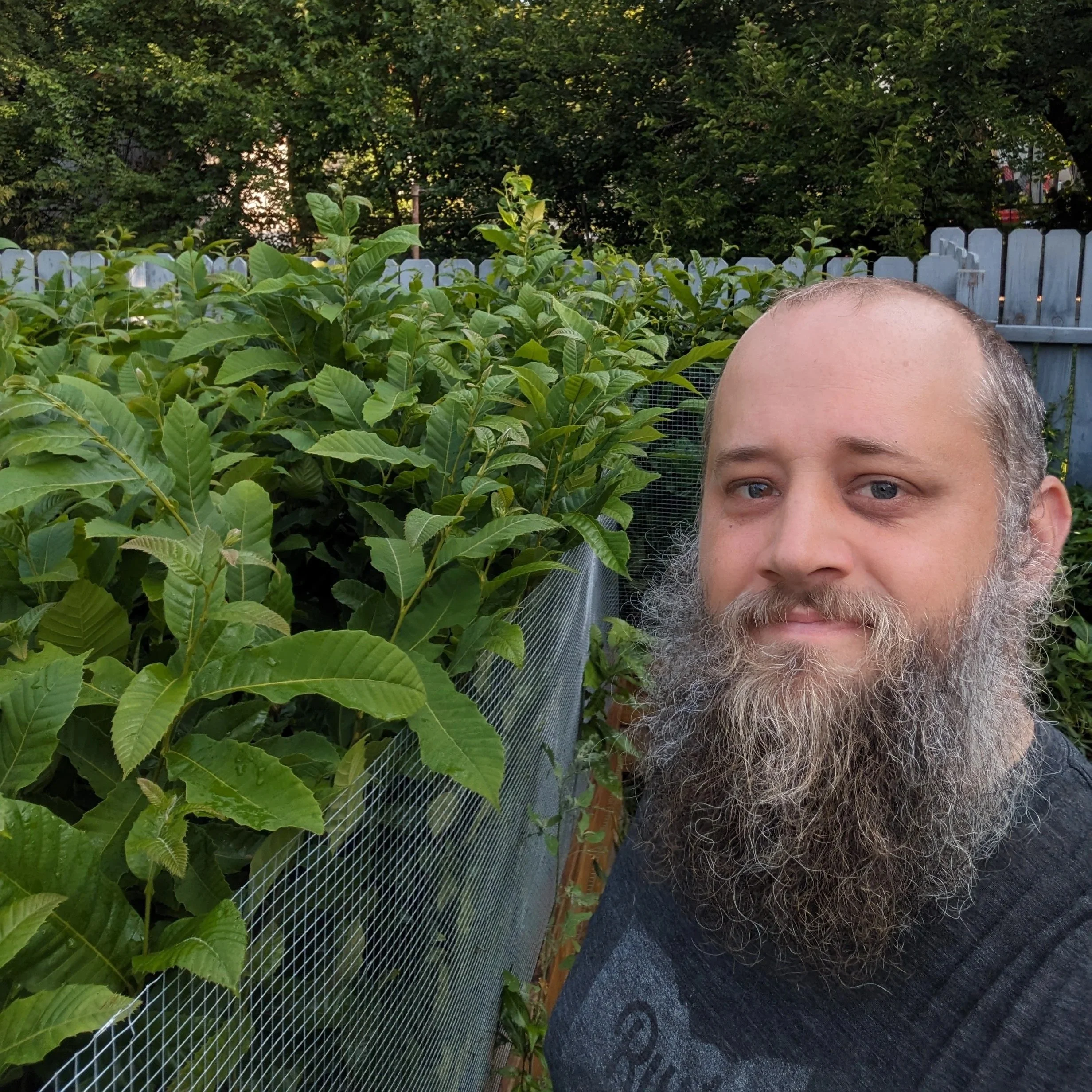
Limited Trees Still Available
We still have a limited selection of potted trees available, including Pecan, Persimmon, Mulberry, and Chestnut.
All trees are now containerized (no bare root available).
We’re preparing for a fully stocked store for 2027. Watch out for that!