Why We Don't Sell Dunstan Chestnuts
If you've researched planting chestnuts for deer, you've almost certainly heard about Dunstan chestnuts. They're everywhere in the wildlife tree market, heavily promoted by major retailers, recommended in hunting magazines, featured in countless YouTube videos, and sold by nurseries across the country.
So why doesn't Deer Orchard sell them?
And more importantly, why won't you find them in commercial orchards where growers depend on chestnuts for their livelihood?
As orchardists who grow chestnuts for production, we've learned what the professional chestnut growing community already knows: Dunstans are basically average Chinese chestnuts with exceptional marketing. There are much better options available.
Let's talk about what Dunstan chestnuts actually are, why they became so popular in the hunting world, and what professional growers plant instead.
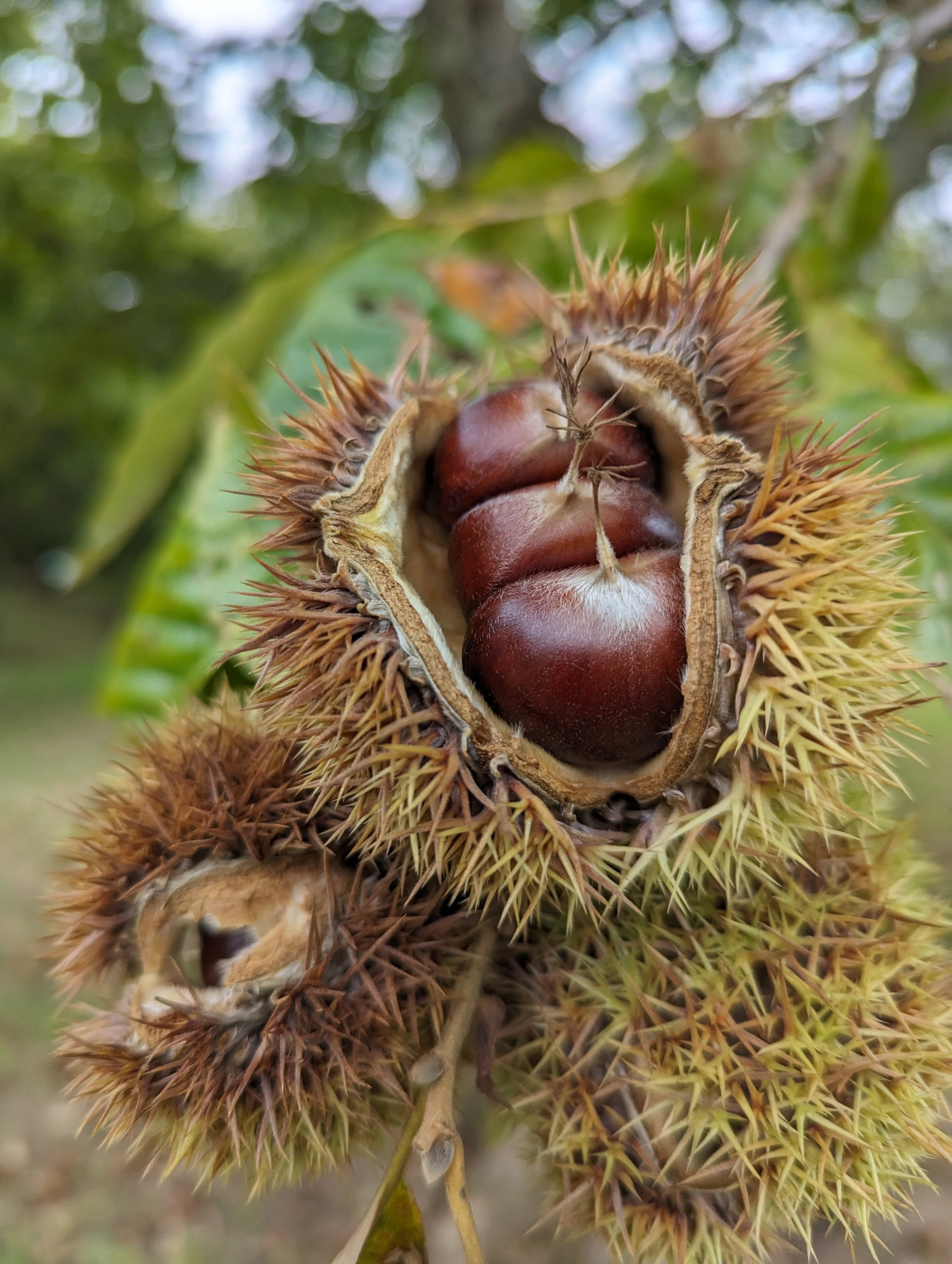
What Are Dunstan Chestnuts, Really?
Dunstan chestnuts are hybrids descended from three Chinese chestnut cultivars—Kuling, Nanjing, and Meiling—crossed with some American chestnut genetics. The variety was developed in the 1950s by Dr. Robert Dunstan and became incredibly popular in the wildlife market in the 1990s, particularly in California.
Here's what you need to understand, straight from professional growers:
Dunstans are approximately 90-99% Chinese chestnut. They typically have no American characteristics at all—not in growth pattern, not in nut characteristics, not in blight resistance, not in any meaningful way.
The "American chestnut restoration" angle is marketing, not genetic reality.
From James Nave, moderator of the Castanea Facebook group (a primary community for professional chestnut growers):
"Dunstan chestnut trees, the alleged American/Chinese hybrids, have very little American genetics, if any. They are anywhere from 90-99% Chinese. Most Dunstan seedlings grow like other Chinese seedlings."
So when you're paying a premium for "American heritage," you're paying for a story, not genetics.
The Professional Grower Perspective
Here's what professional chestnut growers, people whose income actually depends on chestnut production, say about Dunstans:
"Dunstans are basically average Chinese chestnuts, which means there are worse Chinese chestnuts than Dunstans but also means there are a lot of Chinese chestnuts that are better than Dunstans. By 'better' I mean that their nuts taste better and nut size is frequently larger... There are no Dunstans that come close to [superior cultivars like] Black Satin. Dunstans are descended from the three Chinese cultivars Kuling, Nanjing and Meiling, none of which have any superior eating qualities."
— James Nave, Castanea Facebook Group
Think about that for a moment. If you were planting an orchard where your income depended on production and nut quality, would you choose Dunstans? Professional growers don't. They haven't for decades.
The Four Real Problems with Dunstan Chestnuts
Problem #1: Muddy Lineage and Unknown Genetics
Most Dunstan trees are grown from seed, which means extreme genetic variation. One Dunstan seedling might produce great nuts; the next might be mediocre. You're buying a genetic lottery ticket, not a known performer.
Most professional growers only see value in Dunstans as rootstock to be grafted over with superior genetics.
In professional chestnut growing, parentage matters. Growers who depend on production plant seedlings from known, grafted, high-production cultivars. When they plant a seedling, they're planting offspring of proven champion trees—not random crosses with muddy ancestry.
This is our approach at Deer Orchard. Our chestnut seedlings come from known, grafted, high-production cultivars like Qing and Peach. You're not getting random genetics or Dunstan crosses—you're getting seedlings from documented champion parent trees.
Problem #2: They're Just Average Chinese Chestnuts
Dunstans don't have superior characteristics. They're not more productive, not more flavorful, not larger-nutted than good Chinese chestnut cultivars.
They're simply average trees with above-average marketing.
Professional growers have access to Chinese chestnut cultivars with:
Larger nut size
Superior flavor and texture
Heavier annual production
More consistent yields
Earlier ripening or strategically extended drop periods
Why would you plant average genetics when superior, proven cultivars are available?
Problem #3: The American Genetics Argument is Misleading
Here's an uncomfortable truth that the wildlife tree industry doesn't want to talk about:
The more American chestnut genetics your tree has, the more likely it is to die from chestnut blight.
While efforts to restore the American chestnut are noble and important for research purposes, if your goal is to create a productive, long-lasting food source for wildlife, American genetics work against you.
From professional growers in the Castanea community:
"In most of the eastern US, the American chestnut, Castanea dentata, is not a good wildlife tree because it is highly susceptible to damage from chestnut blight."
And regarding hybrids:
"Most American hybrids don't have very good nut quality or very good nut size, and don't have much blight resistance either."
Dunstans have just enough American genetics to be marketable ("Help restore the American chestnut!") but not enough to meaningfully matter, it is mostly a Chinese tree, and what little is there doesn't help with blight resistance or nut quality. In fact, it may compromise both.
Pure Chinese chestnuts are already fully blight-resistant with decades of proven performance across the eastern United States. Why introduce American genetics that compromise this proven resistance?
Problem #4: You're Paying Premium Prices for Average Genetics
Walk into any major hunting retailer or browse wildlife tree websites. You'll see Dunstans priced at a premium compared to "generic" Chinese chestnuts.
But you're not paying for superior genetics. You're paying for:
Name recognition
Marketing story about American heritage
Retailer markup on a heavily promoted brand
Retailers charge premium prices for Dunstans based on the hybrid backstory and brand recognition. But you're paying more for effective marketing and a compelling story—not superior performance in the field.
Can you get a good tree from Dunstan genetics, of course! But this is from the lottery ticket of genetics, and we would rather have more chances for a winner from superior genetics.
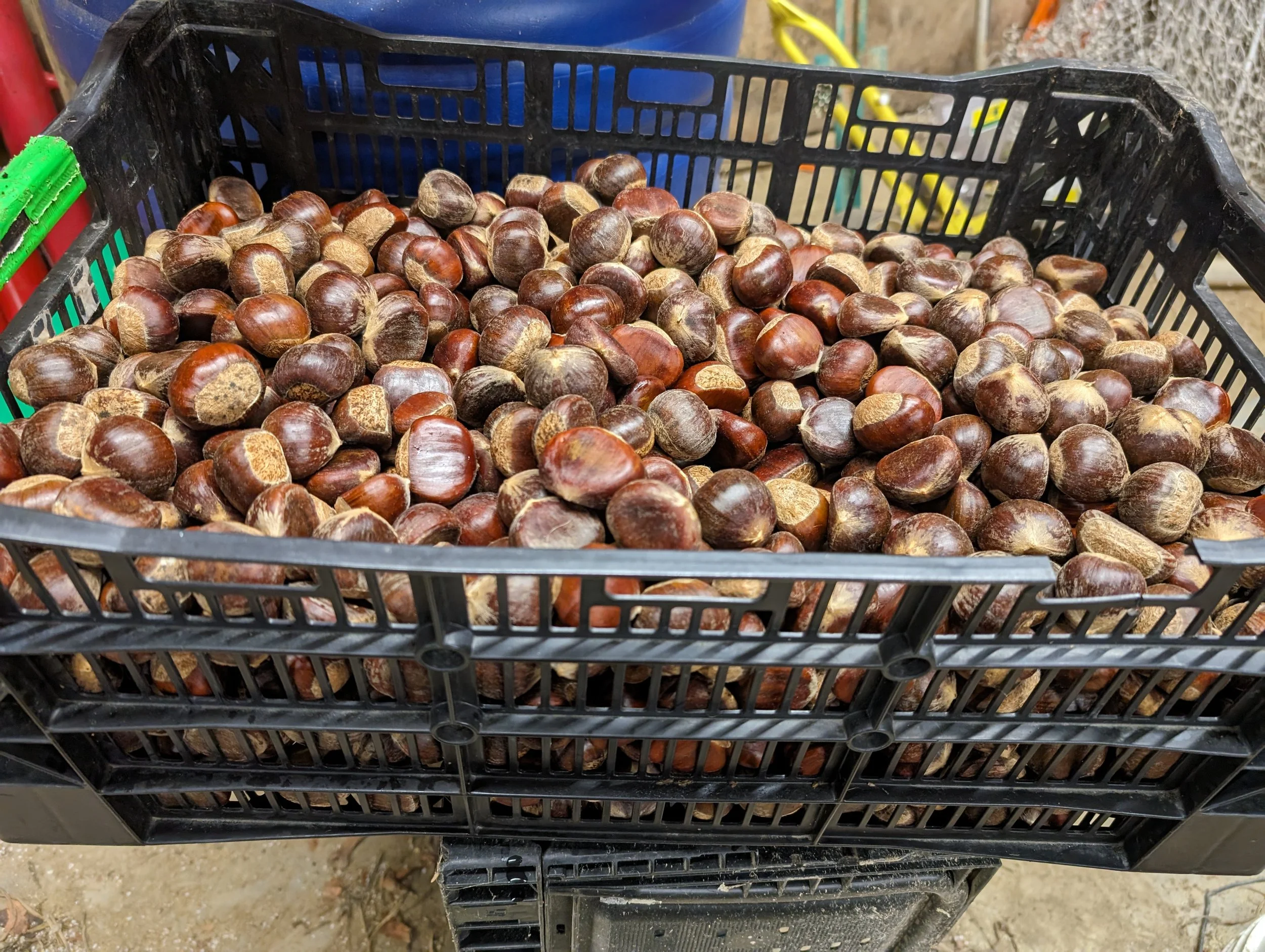
Our Philosophy: The Only Difference Is a Fence
The only difference between an orchard and a deer orchard is a fence.
We're orchardists first. We grow fruit and nut trees for human consumption, where production and quality actually matter to our bottom line. We apply the same standards to the trees we sell for wildlife.
We don't plant Dunstans in our commercial orchards. Why would we recommend them for your deer orchard?
Don't settle for average genetics with good marketing. Plant the same quality cultivars that commercial growers depend on for their livelihood.
Your deer don't care about marketing brochures or hybrid backstories. They care about food production—lots of it, consistently, year after year.
Give them trees that actually deliver.
Ready to Plant Superior Genetics?
Now that you understand why professional growers avoid Dunstans, the question becomes: What should you plant instead?
We've created a comprehensive guide that walks you through:
How to evaluate your specific property conditions
Which cultivars professional growers actually recommend
Whether to choose seedlings or grafted trees
How to create a strategic planting plan for maximum production
Read our complete guide: How to Choose Chestnut Trees for Your Deer Orchard
Or if you're ready to start with quality genetics from known superior parents:
Shop Chinese Chestnuts from Elite Parent Stock →
Have questions about your specific situation? Contact us — we're happy to provide recommendations based on your location, soil, and goals.
Learn More from Professional Growers
Want to dive deeper into professional chestnut growing? Join the Castanea Facebook group, where commercial growers generously share their knowledge and experience.
The group maintains comprehensive resources including:
Nursery sources for quality genetics
Variety performance discussions
Growing technique advice
Research updates
It's the best education you'll get on what actually works versus what's just marketed.